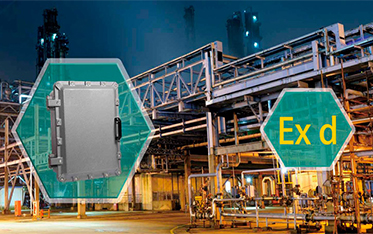
Choosing the right electrical enclosure for a hazardous location is essential for equipment safety, regulatory compliance, and long-term reliability. In facilities handling flammable gases or vapors, the difference between Class I Division 1 (C1D1) and Class I Division 2 (C1D2) can directly affect enclosure design, certification requirements, and installation decisions.
Although both classifications apply to hazardous locations, they describe different conditions under which an ignitable atmosphere may occur. Understanding these differences helps engineers, contractors, and procurement teams specify suitable equipment without overlooking critical safety requirements.
This guide explains how C1D1 and C1D2 differ, where each classification applies, and what to consider when selecting an explosion-protection enclosure.
What Are Class I Division 1 and Class I Division 2 Enclosures?
A Class I hazardous location is an area where flammable gases or vapors may be present in sufficient concentrations to create an ignitable atmosphere. Division 1 and Division 2 distinguish these locations according to the likelihood and circumstances of hazardous gas or vapor exposure.
What Is a Class I Division 1 Enclosure?
A Class I Division 1 enclosure is intended for electrical equipment installed in locations where ignitable concentrations of flammable gases or vapors may occur during normal operations, frequently during maintenance, or under certain equipment or process failure conditions specified by the applicable classification rules.
Typical applications may include certain solvent-handling areas, process equipment locations, and facilities where flammable substances can be released during routine operations. The enclosure and its installed electrical components must meet the requirements for the specific hazardous location.
What Is a Class I Division 2 Enclosure?
A Class I Division 2 enclosure is designed for equipment installed in locations where flammable gases or vapors are normally confined within closed systems and would generally become hazardous only under abnormal conditions, such as equipment failure or accidental leakage. Division 2 also covers certain areas where ventilation normally prevents hazardous concentrations or where gases may occasionally enter from an adjacent Division 1 location.
For a more detailed explanation of application conditions and selection requirements, see our guide to the Class 1 Division 2 enclosure.
Class I Division 1 vs Class I Division 2: Key Differences
The main difference is the classification of the surrounding hazardous location, not simply the enclosure's appearance or material. That classification influences the protection methods, certification, and installation requirements for the equipment.
| Comparison | Class I Division 1 | Class I Division 2 |
|---|
| Hazard conditions | Ignitable gases or vapors may occur under normal or other specified conditions | Hazardous concentrations generally arise under abnormal conditions or specified ventilation failures |
| Protection design | Must comply with the applicable requirements for Division 1 | Must comply with the applicable requirements for Division 2 |
| Equipment certification | Must be suitable for the specific Division 1 location | Must be suitable for the specific Division 2 location |
| Selection considerations | Hazard classification, gas group, temperature rating, and installation method | The same factors, assessed against the specific Division 2 requirements |
Differences in Protection Design
Explosion-protection methods vary by equipment construction and certification. Some enclosures use flameproof or explosionproof designs, while other equipment relies on different protection concepts permitted by the applicable standards. A product's protection method must match its intended hazardous-location application.
Division 1 equipment is not automatically suitable for every Division 2 application, nor should a Division 2 enclosure be assumed suitable for Division 1. Any substitution must be verified against the product's certification, installation instructions, and applicable electrical code.
Cost and Maintenance Considerations
Project costs depend on enclosure construction, internal components, certification, materials, installation, and maintenance requirements. Division 1 solutions may involve more demanding design and installation requirements, but the actual cost difference varies by application. Choosing equipment based on the site's documented classification is more reliable than selecting it by price alone.
Where Are C1D1 and C1D2 Enclosures Commonly Used?
Both classifications may be relevant in oil and gas facilities, chemical plants, fuel-handling operations, and other industrial environments involving flammable substances. However, different areas within the same facility may have different hazardous-location classifications.
For example, a process area where ignitable concentrations may occur during normal operation could require Division 1 equipment. A separate area handling flammable gas in normally closed systems may qualify as Division 2, depending on the site assessment and applicable rules.
The classification must be determined through appropriate hazardous-area analysis. The industry or presence of flammable materials alone does not establish whether a particular location is C1D1 or C1D2.
How to Choose the Right Explosion-Proof Enclosure
Before purchasing an enclosure, confirm the project's hazardous-location classification and the equipment's complete certification. Several additional factors influence whether a product is suitable.
Gas group and temperature rating: Verify that the equipment is rated for the gases or vapors present and meets the required temperature classification.
Environmental protection: Consider moisture, dust, corrosion, UV exposure, and ambient temperature. IP ratings and NEMA enclosure types describe environmental protection but do not independently establish hazardous-location approval.
Internal components: Terminals, circuit breakers, switches, and other electrical components must be suitable for the intended location and included in an appropriately evaluated assembly where required.
Cable entries and installation: Confirm compatible cable glands, conduit entries, seals, grounding, and installation methods.
Certification and documentation: Review the product marking, certification records, installation instructions, and applicable local code requirements.
These checks help prevent mismatches between the enclosure, its internal components, and the actual operating environment.
Aluminum, Stainless Steel, or GRP: Which Enclosure Material Should You Choose?
Material selection affects durability, weight, corrosion resistance, and maintenance, but it does not replace the need for appropriate hazardous-location certification.
Aluminum enclosures offer relatively low weight and can provide good corrosion resistance when the alloy and finish are suitable for the application. They are often considered for industrial junction boxes and electrical housings.
Stainless steel enclosures may be appropriate for corrosive environments, washdown areas, and installations with demanding hygiene or durability requirements. The required grade depends on the chemicals and environmental conditions involved.
Glass-reinforced polyester (GRP) enclosures can provide corrosion resistance and electrical insulation for selected industrial applications. Their suitability depends on mechanical requirements, temperature limits, and the relevant product certification.
Regardless of material, verify that the complete enclosure configuration is approved for the intended hazardous location.
Common Types of Explosion-Proof Enclosures for Industrial Applications
Explosion-protection enclosures are available in different designs to accommodate terminal connections, power distribution, control equipment, and other electrical functions. Selecting the right type requires matching the protection concept and certification to the application.
Flameproof or explosionproof enclosures: Designed and tested according to the applicable standards for their intended hazardous-location use.
Increased-safety enclosures: Designed to reduce the likelihood of arcs, sparks, and excessive temperatures under specified operating conditions. They are not interchangeable with flameproof designs.
Stainless steel and GRP enclosures: Offer material options for applications where corrosion resistance, durability, or weight is an important consideration.
SUREALL offers enclosure solutions in different materials and protection designs. For example, its SEE-e series aluminum enclosure uses an increased-safety Ex e design and is listed for specified hazardous-location applications, including Class I Division 2. Always confirm the exact model, certification, and assembled configuration before specifying a product for a project.
Common Mistakes to Avoid When Selecting Hazardous Location Enclosures
Several common selection errors can lead to compliance problems or unnecessary project costs.
Choosing by enclosure appearance: Similar-looking housings may have different protection designs and certification scopes.
Confusing Division and Zone classifications: C1D1/C1D2 and Zone 1/Zone 2 are related classification systems, but they are not universally interchangeable without checking the applicable standards.
Relying only on IP or NEMA ratings: Environmental protection does not establish explosion-protection compliance.
Ignoring installed components: The enclosure, internal electrical devices, cable entries, and final assembly must all be suitable for the intended application.
Overlooking installation requirements: Incorrect glands, seals, wiring methods, or modifications can compromise the approved protection design.
Frequently Asked Questions
Can a Class I Division 1 Enclosure Be Used in a Division 2 Area?
Potentially, if the equipment is also approved or otherwise accepted for the specific Division 2 application and all installation requirements are met. Confirm the certification and product instructions rather than assuming suitability based on the Division 1 marking alone.
Can a Class I Division 2 Enclosure Be Used in a Division 1 Area?
Not unless the equipment and its complete configuration are specifically suitable and approved for the Division 1 location. A Division 2 rating alone does not establish Division 1 suitability.
What Is the Difference Between C1D1 and Zone 1?
Both systems classify hazardous gas or vapor locations, but they use different classification frameworks and criteria. Their categories should not be treated as automatic equivalents. Follow the standards and certification system applicable to the project.
Does an IP66 Enclosure Mean It Is Explosion-Proof?
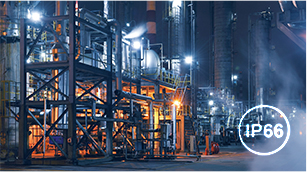
No. IP66 indicates protection against dust ingress and powerful water jets under specified test conditions. It does not independently demonstrate compliance with hazardous-location requirements.
What Information Should I Provide When Requesting an Enclosure Quote?
Provide the hazardous-area classification, gas group, temperature rating, required certification, enclosure dimensions, internal components, cable-entry requirements, ambient conditions, and quantity. These details help the manufacturer assess the appropriate configuration.


 English
 Español
 português
 русский
 日本語
 العربية
 français
 Deutsch
 한국어
 italiano
 Malay
 ATEX/IECEx Standard

 Each member of the SUREALL team works hard to save energy, reduce budget, maximize durability, bring success to every project for every customer. Here are just a few examples of how we've impacted the markets we're proud to serve.View More +