Selecting an explosion proof enclosure involves more than checking an IP rating or comparing dimensions. The enclosure must match the hazardous area classification, environmental conditions, electrical components, cable entry requirements, and applicable certification. Overlooking any of these details can lead to costly design changes, installation delays, or compliance issues.
For engineers, project managers, and procurement teams, the most effective approach is to resolve critical technical requirements before production begins. The following seven considerations help identify common selection mistakes and reduce project risks.
Why Can an Enclosure Meet the IP Rating but Still Be Unsuitable for Your Hazardous Area?
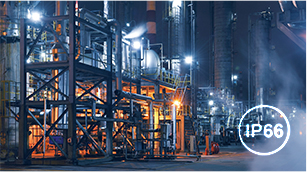
An IP66 rating indicates protection against dust ingress and powerful water jets, while NEMA 4X addresses environmental protection, including corrosion resistance. Neither rating alone confirms that an enclosure is suitable for an explosive atmosphere. Hazardous area applications require the appropriate explosion protection method and certification for the intended location.
Before selecting a model, verify the area classification, gas or dust group, temperature class where applicable, ambient temperature range, and required protection method. Also check that the certification covers the exact model and configuration being purchased. An enclosure rated IP66 may still be unsuitable for a Class I, Division 1 installation if its hazardous location certification does not cover that application. Environmental protection and explosion protection must be evaluated separately.
What Happens When Cable Entries Are Finalized Too Late?
Late cable entry decisions can trigger more than additional machining. If entry positions conflict with conduit routing, cable trays, mounting brackets, or internal components, the original design may no longer work. Incorrect thread types, insufficient entry quantities, or inadequate spacing can also complicate installation and cable gland selection.
These issues become more expensive when discovered after drawings are approved or production has started. For customized enclosures, confirm the number, position, thread standard, and size of every cable entry before manufacturing. Review the cable and conduit routing alongside the internal component layout, and have the manufacturer confirm whether the proposed openings and accessories remain within the approved design and certification scope.
How Much Internal Space Should You Reserve for Wiring, Heat, and Maintenance?
External dimensions do not tell the whole story. Circuit breakers, terminal blocks, relays, and other components need sufficient mounting and connection space, while conductors require suitable bending radii, routing channels, and clearance for terminal access. A design that fits on paper may still be difficult to wire or service once all components and cables are installed.
Thermal performance is another important consideration. Component power losses, ambient temperature, enclosure size, and ventilation restrictions can affect internal temperatures and the permissible operating conditions. Before approving the layout, allow room for inspection, testing, adjustments, and component replacement, and assess temperature limits against the applicable requirements. Reviewing a detailed internal layout before production is generally more practical than enlarging or replacing an enclosure after installation.
Which Enclosure Modifications Need to Be Reviewed Before Production?
Custom requirements such as drilling additional cable entries, cutting openings, adding viewing windows, changing covers, or installing mounting accessories should be reviewed before fabrication. These modifications can affect structural integrity, sealing performance, protection methods, and the validity of the original certification. The risk is particularly important for flameproof designs, where joint geometry and flame paths are critical to the protection concept.
Do not assume that a modification is acceptable simply because it fits the equipment or can be completed with standard workshop tools. Submit the proposed changes to the manufacturer and, where required, the responsible certification body or engineering authority. Confirm the permitted configuration and any necessary reassessment before work begins. This is especially important when modifying certified explosion proof enclosures for project-specific applications.
How Should You Balance Enclosure Material, Corrosion Resistance, Weight, and Cost?
Material selection should reflect the actual operating environment rather than a general claim of corrosion resistance. Stainless steel may be appropriate for demanding chemical or marine environments, but the grade matters: 304 and 316 stainless steel do not offer identical corrosion performance. Aluminum alloy can reduce weight and simplify handling, while glass-reinforced polyester (GRP) may be suitable where low weight and resistance to certain corrosive environments are priorities. The final choice also depends on mechanical loads, mounting arrangements, maintenance access, and the required protection method.
| Selection factor | Aluminum alloy | Stainless steel | GRP |
|---|
| Weight | Generally lighter than stainless steel | Generally heavier | Generally lightweight |
| Corrosion considerations | Assess coating, alloy, and exposure conditions | Select the appropriate grade, such as 304 or 316 | Assess chemical compatibility and UV exposure |
| Mechanical performance | Depends on alloy, wall thickness, and design | Often suitable for demanding mechanical environments | Depends on reinforcement and enclosure construction |
| Installation | Can simplify handling and mounting | May require stronger supports and more handling effort | Lightweight installation, subject to mounting requirements |
| Cost considerations | Compare total cost, finish, and service life | Include grade, fabrication, and maintenance costs | Consider initial cost, durability, and replacement needs |
The table provides general guidance, not a substitute for application-specific assessment. For example, an explosion proof aluminum enclosure may be worth evaluating when weight and installation efficiency matter, while stainless steel explosion proof enclosures may be more appropriate for certain corrosive environments. Compare the actual material grade, construction, certification, and expected service conditions before making the final decision.
What Should Buyers Check When Comparing Explosion-Proof Enclosure Quotes?
Two quotations are not directly comparable if they cover different technical specifications. A lower price may reflect a different hazardous area rating, thinner or different material, smaller dimensions, fewer cable entries, or the exclusion of cable glands and internal components. Comparing unit prices without checking these differences can create unexpected costs during installation or commissioning.
Ask each supplier to quote against the same specification and confirm the scope in writing. Check the enclosure model, certification requirements, material grade, dimensions, internal configuration, cable entries, accessories, drawing approval process, and required documentation. Also clarify customization charges, production lead time, inspection requirements, and packaging or delivery terms. A clear, itemized quotation makes it easier to assess the total project cost rather than simply choosing the lowest initial price.
What Should Be Confirmed Before an Explosion-Proof Enclosure Goes Into Production?
Before issuing final production approval, ensure that the technical specification, approved drawings, and quotation all describe the same configuration. Confirm the hazardous area classification, protection method, model-specific certification, enclosure dimensions, component arrangement, cable entry locations, material, and accessories. Any outstanding design changes should be resolved before manufacturing rather than left for the installation team to address.
A practical pre-production review should also cover operating temperature limits, mounting conditions, maintenance access, inspection requirements, and the documents required for delivery. For example, buyers considering an Ex d Class I, Division 1 enclosure should verify that the selected model and final configuration meet the project's specific hazardous location requirements. Obtain confirmation of the approved configuration and applicable certification documentation before authorizing production.


 English
 Español
 português
 русский
 日本語
 العربية
 français
 Deutsch
 한국어
 italiano
 Malay
 ATEX/IECEx Standard
 Each member of the SUREALL team works hard to save energy, reduce budget, maximize durability, bring success to every project for every customer. Here are just a few examples of how we've impacted the markets we're proud to serve.View More +