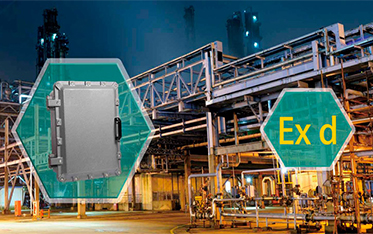
In hazardous areas, reliable enclosure sealing is essential for protecting electrical components from water, dust, humidity, and other environmental factors. For explosion-proof equipment, sealing performance also works together with the required explosion protection to ensure reliable operation in demanding environments.
However, sealing failures can still occur in the field. Water ingress, loose cable glands, and damaged sealing components are among the common problems that can reduce enclosure protection.
Understanding these failure points can help engineers and installers select and install explosion-proof equipment more effectively.
Common Sealing Failures in Hazardous Area Installations
1. Water Ingress
Water ingress is one of the most common enclosure sealing problems.
It can occur when a gasket is damaged, incorrectly positioned, or compressed unevenly. Cable glands and unused cable entries can also become potential entry points for water if they are not correctly installed or sealed.
Once water enters an enclosure, it may cause corrosion, insulation problems, short circuits, and premature failure of internal components.
For equipment installed outdoors, offshore, or in areas exposed to rain and high humidity, reliable enclosure sealing is particularly important.
2. Loss of Sealing at Cable Entries
Cable entries are another common weak point.
A cable gland that is not correctly matched to the cable diameter may not provide sufficient sealing. Improper tightening, damaged sealing components, or incorrect installation can also reduce the protection of the enclosure.
Because cable entries directly connect the inside of the enclosure with the external environment, their sealing performance is an important part of the overall enclosure protection.
3. Damaged or Loose Sealing Components
Gaskets, threads, cable glands, and other sealing components can deteriorate due to mechanical damage, vibration, temperature changes, chemicals, or long-term environmental exposure.
Even when the enclosure itself is properly designed, damaged sealing components can reduce its protection over time.
This is why sealing performance should be considered from both the enclosure design and installation perspective.
How Explosion-Proof Enclosures Improve Sealing Performance
A reliable explosion-proof enclosure does not depend on a single sealing component. The enclosure structure, cover design, cable entries, and sealing components all work together to maintain protection.
Gasket Sealing Between the Cover and Enclosure Body
Many explosion-proof junction boxes and enclosures use a sealing gasket between the cover and the enclosure body.
The gasket helps close the interface between the two surfaces and provides additional protection against water and dust ingress. Proper gasket material, positioning, and compression are important for maintaining the intended IP protection.
The sealing surface should also be properly machined and protected from damage during installation and maintenance.

Threaded Designs for Ex d Enclosures
Some Ex d flameproof enclosures use a threaded cover design instead of a conventional hinged cover.
The precisely machined threaded structure forms the required flameproof joint when the cover is properly assembled. At the same time, the threaded design provides a close-fitting connection between the cover and enclosure body.
For Ex d IIC applications, the enclosure design and flameproof joint must meet the applicable requirements of the relevant explosion protection standards. Sealing and flameproof protection should not be considered the same function, but both are important to overall enclosure performance.

Sealed Cable Glands
Cable entries require the same level of attention as the main enclosure body.
Suitable explosion-proof cable glands can provide sealing around the cable and at the enclosure entry point. Double-sealing gland designs can provide additional sealing between the cable and gland, helping maintain the enclosure's overall protection.
The gland must also be correctly selected according to the cable diameter, thread type, enclosure design, and hazardous-area requirements.

Properly Sealing Unused Entries
Unused cable entries should not be overlooked.
An otherwise well-sealed explosion-proof enclosure can still lose its environmental protection if an unused entry is left open or fitted with an unsuitable plug.
Suitable blanking plugs or stopping plugs should be used to maintain the required protection of the enclosure.

IP66 and Sealing Protection
IP protection and explosion protection serve different purposes.
Explosion protection is designed to prevent electrical equipment from becoming an ignition source in a hazardous atmosphere, while the IP rating describes the enclosure's protection against the ingress of solids and water.
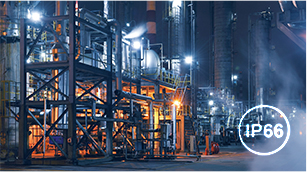
For example, an IP66 enclosure is dust-tight and protected against powerful water jets. This level of environmental protection is particularly useful for outdoor and industrial installations where equipment may be exposed to rain, dust, or water cleaning.
However, achieving IP66 is not simply a matter of selecting an enclosure with an IP66 rating. The complete installation must maintain the same level of protection.
Correct gasket installation, suitable cable glands, properly sealed unused entries, and correctly tightened components are all important.
Preventing Sealing Failures During Installation
Even a well-designed explosion-proof enclosure can lose its protection if it is installed incorrectly.
Before installation, check the condition of the gasket, threads, cable glands, and sealing surfaces. Keep sealing surfaces clean and free from damage.
Cable glands should match the cable diameter and enclosure entry thread, and they should be tightened according to the manufacturer's requirements.
Unused entries should be properly closed with suitable blanking plugs. After installation, inspect the enclosure for loose components, damaged sealing parts, or visible gaps.
For equipment operating in harsh environments, periodic inspection is also recommended. Gaskets, cable glands, threads, and other sealing points should be checked for deterioration, corrosion, or mechanical damage.
Conclusion
Sealing failures in hazardous area installations are often caused by relatively simple issues: damaged gaskets, improperly installed cable glands, loose components, or unsealed cable entries.
Reliable protection therefore starts with enclosure design but also depends on correct component selection, installation, and maintenance.
For explosion-proof enclosures, features such as cover gaskets, machined threaded flameproof joints, sealed cable glands, and properly protected cable entries help maintain enclosure protection in demanding environments.
By combining appropriate explosion protection with reliable environmental sealing, hazardous-area equipment can provide more dependable protection against both ignition risks and environmental exposure.


 English
 Español
 português
 русский
 日本語
 العربية
 français
 Deutsch
 한국어
 italiano
 Malay

 ATEX/IECEx Standard
 Each member of the SUREALL team works hard to save energy, reduce budget, maximize durability, bring success to every project for every customer. Here are just a few examples of how we've impacted the markets we're proud to serve.View More +