In hazardous industrial environments such as oil and gas facilities, chemical plants, offshore platforms, and refineries, electrical equipment must be designed to operate safely in the presence of flammable gases, vapors, or combustible dust. Among the most commonly used explosion-protected electrical assemblies are explosion proof junction boxes and explosion proof control panels.
Because both products are housed in rugged explosion-proof enclosures and are often installed in the same hazardous locations, they are sometimes confused with one another. However, despite their similar appearance, they serve very different functions within an electrical system.
Understanding the differences between an explosion proof junction box and an explosion proof control panel is essential for proper equipment selection, system reliability, regulatory compliance, and cost optimization.
What Is an Explosion Proof Junction Box?
An explosion proof junction box is primarily designed for electrical connection, cable termination, and signal distribution. Its main purpose is to provide a safe and secure location where electrical conductors can be connected, branched, or terminated within a hazardous area.
A typical explosion proof junction box contains relatively simple internal components, such as:
Terminal blocks
Grounding terminals
Cable glands
Connection links
Distribution terminals
Unlike control equipment, a junction box does not perform operational control functions. It simply serves as an interface point for electrical wiring.
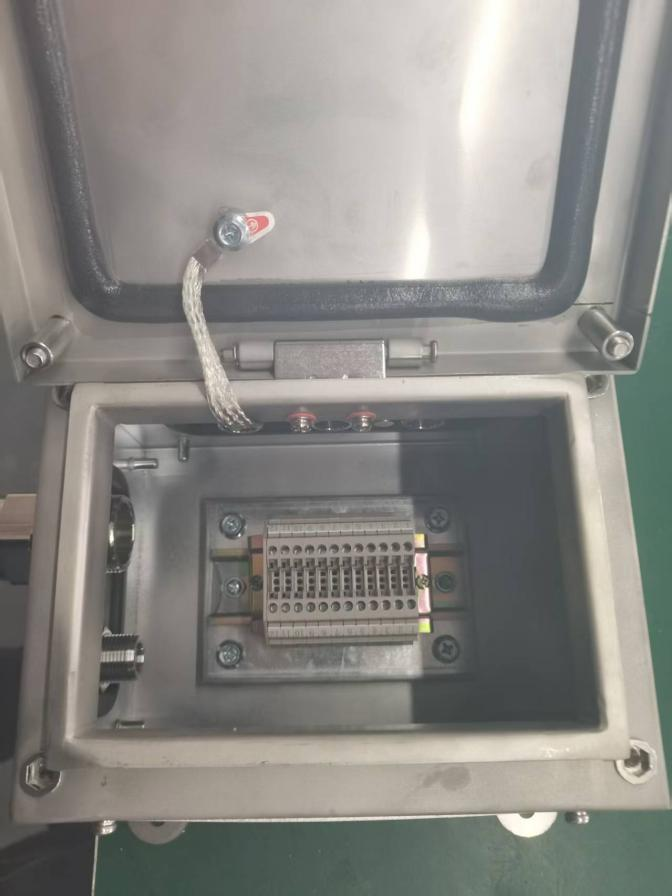
1-Stainless Steel Junction Box
Explosion proof junction boxes are commonly used for:
Instrument signal wiring
Field device connections
Cable branching and distribution
Motor terminal connections
Power and lighting circuits
Heat tracing systems
In many industrial installations, dozens or even hundreds of junction boxes may be distributed throughout a facility to simplify cable management and reduce wiring complexity.
What Is an Explosion Proof Control Panel?
An explosion proof control panel performs a much broader role than a junction box. In addition to providing electrical connections, it contains components that monitor, control, protect, and manage industrial equipment.
Depending on the application, an explosion proof control panel may include:
These components enable the control panel to execute operational functions such as equipment startup and shutdown, process automation, fault protection, and system monitoring.
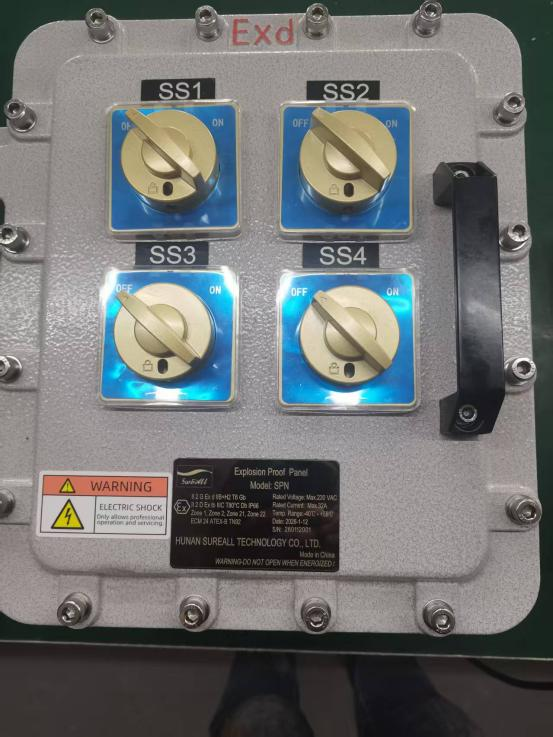
2-Aluminum Alloy Panel
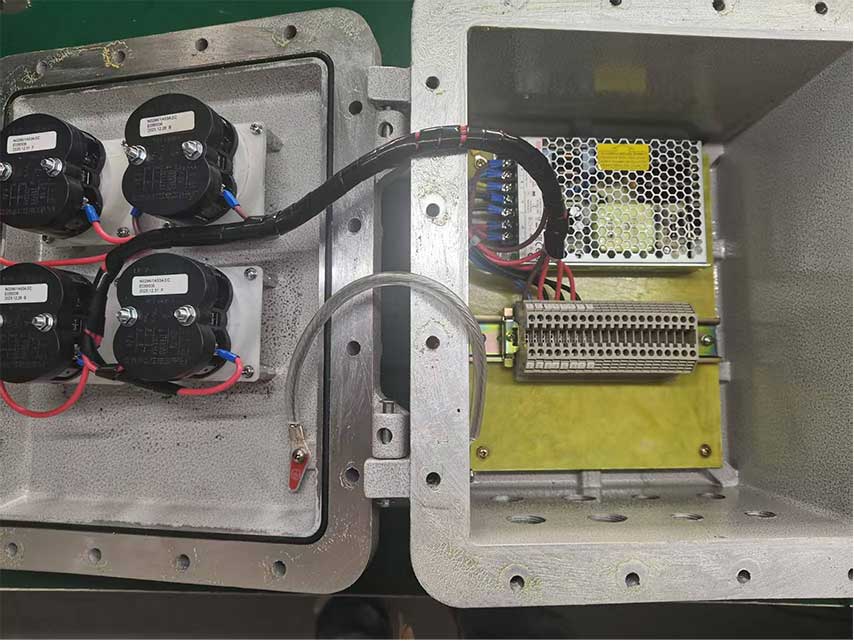
Typical applications include:
In simple terms, a control panel is an active part of the control system, whereas a junction box is primarily a passive connection point.
Where active load switching and process logic are required, compare the available hazardous-area control panel solutions rather than specifying a terminal-only junction box.
Key Differences Between Explosion Proof Junction Boxes and Control Panels
Although explosion proof junction boxes and explosion proof control panels may use similar enclosure types and protection methods, they are designed to serve fundamentally different purposes within an electrical system.
The simplest way to understand the difference is that a junction box is designed for connection, while a control panel is designed for control.
The following table highlights the major differences between the two:
Feature | Explosion Proof Junction Box | Explosion Proof Control Panel |
Primary Function | Electrical connection and cable distribution | Equipment control and process management |
Typical Internal Components | Terminal blocks, grounding terminals, cable glands | Breakers, relays, PLCs, contactors, switches, indicators |
Operational Logic | No control logic | May include manual, automatic, or programmable control |
Power Handling | Signal circuits or power distribution | Often manages and switches electrical loads |
Complexity | Relatively simple | More complex electrical design |
Enclosure Size | Usually compact | Typically larger due to internal equipment |
Maintenance Requirements | Low maintenance | Regular inspection and testing required |
Engineering Design | Basic wiring design | Control system and protection design required |
Cost | Lower | Higher due to components and engineering effort |
Typical Users | Electricians and installation contractors | Automation engineers and system integrators |
Both products belong to the broader explosion proof box family; the key distinction is whether the unit performs passive cable termination or active control and protection.
While the table provides a quick comparison, the differences become clearer when viewed from a practical engineering perspective.
A junction box acts as a safe wiring hub. It allows multiple field cables to be terminated, interconnected, or distributed within a hazardous area. Once installed, the box generally performs no active function other than maintaining reliable electrical continuity.
A control panel, however, actively participates in system operation. It can start and stop motors, execute control sequences, monitor equipment status, generate alarms, and provide electrical protection. In many cases, the control panel serves as the operational "brain" of a process or machine.
For example, a junction box installed near a group of field transmitters may simply collect several instrument signals and route them back to a control room. The box itself does not process or interpret those signals.
By contrast, a pump control panel may receive signals from pressure transmitters, analyze operating conditions through a PLC, start or stop pumps automatically, activate alarms during abnormal conditions, and protect equipment from overload or short-circuit faults.
Although both products contribute to a safe and reliable hazardous-area installation, they perform very different roles within the overall electrical architecture.
Choosing the Right Equipment for Your Application & Explosion Protection Considerations
Selecting between an explosion proof junction box and an explosion proof control panel depends entirely on the functional requirements of the installation. In general, an explosion proof junction box is the appropriate choice when the application is limited to electrical connection and distribution tasks. This includes cable termination, signal distribution, power routing, instrument wiring connections, and general electrical branching points. For instance, when multiple field instruments need to be connected back to a central control room, a junction box can be used to consolidate field wiring and significantly simplify cable management without introducing any control functionality.
In contrast, an explosion proof control panel is required when the system involves active control or automation functions. Typical applications include equipment start and stop operations, process automation, motor control, logic execution, system monitoring, and protective functions. A common example is a pump station that requires automatic operation based on process signals, as well as fault indication and overload protection. In such cases, a control panel is necessary because it integrates electrical protection and control logic, whereas a junction box alone would not be sufficient. One frequent design mistake is attempting to use an oversized junction box as a substitute for a control panel. Although the enclosure may physically accommodate additional components, control systems require proper electrical design, certified internal layouts, and thermal management considerations that cannot be achieved in a passive junction box structure.
From an explosion protection perspective, both junction boxes and control panels must comply with hazardous area requirements based on zone classification, gas group, temperature class, environmental conditions, and applicable certification standards such as IECEx or ATEX. However, explosion proof control panels typically present more complex engineering challenges due to the presence of energized components that generate heat during operation. As a result, additional attention must be given to internal temperature rise, power dissipation, component spacing, ventilation design, and electrical protection coordination. In comparison, junction boxes are generally simpler in design and therefore involve fewer thermal management concerns, making their explosion protection requirements more straightforward.
Conclusion
Although explosion proof junction boxes and explosion proof control panels may look similar externally, they perform very different roles within hazardous-area electrical systems.
A junction box is designed primarily for safe electrical connection and cable management. It acts as a passive distribution point that simplifies wiring throughout a facility.
A control panel goes far beyond simple connectivity. It integrates electrical and automation components to control, monitor, and protect industrial processes and equipment.
Understanding these distinctions helps engineers, contractors, and project owners select the appropriate equipment for each application. Proper selection not only improves operational reliability but also enhances safety, simplifies maintenance, and ensures compliance with hazardous-area regulations.
When evaluating a hazardous-area project, remember a simple rule: if the goal is to connect circuits, a junction box is usually sufficient; if the goal is to control equipment, a control panel is the correct solution.


 English
  Español
  português
  русский
  日本語
日本語  العربية
  français
  Deutsch
  한국어
한국어  italiano
  Malay
Malay 

 ATEX/IECEx Standard
 Each member of the SUREALL team works hard to save energy, reduce budget, maximize durability, bring success to every project for every customer. Here are just a few examples of how we've impacted the markets we're proud to serve.View More +