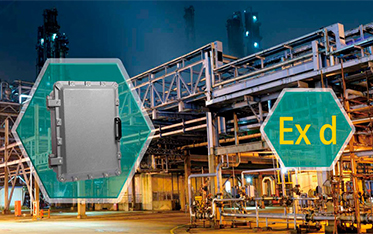
In hazardous areas, selecting the correct cable is only part of ensuring a safe and compliant installation. The performance of explosion proof fittings, including cable glands and sealing accessories, is equally important.
Flexible and armored cables have different structural characteristics and therefore require different explosion protection solutions. Choosing the wrong fitting can compromise sealing performance, grounding continuity, and overall explosion protection integrity.
This article explains the key differences between flexible and armored cables and provides guidance on selecting suitable explosion proof fittings for hazardous area applications.
Flexible and Armored Cables
Flexible Cables
Flexible cables are designed with multi-strand conductors that allow frequent bending and movement. They are commonly used in applications where vibration or equipment movement is expected.
Typical applications include:
Explosion proof lighting
Portable equipment
Motors and pumps
Instrumentation systems
Flexible cables offer excellent flexibility but provide limited mechanical protection.
Armored Cables
Armored cables incorporate a protective metallic layer, such as steel wire armor (SWA) or steel tape armor (STA), to withstand mechanical impacts and harsh environments.
They are widely used in:
Armored cables provide superior mechanical protection and require special cable glands capable of securing and grounding the armor.
Why Cable Construction Affects Explosion Protection
The cable gland is a critical part of the explosion protection system. Its function extends beyond simply securing the cable.
Proper fittings must provide:
Because flexible and armored cables have different structures, the same cable gland cannot always be used for both cable types.
Explosion Proof Fittings for Flexible Cables
Flexible cables are typically used with compression-type explosion proof cable glands.
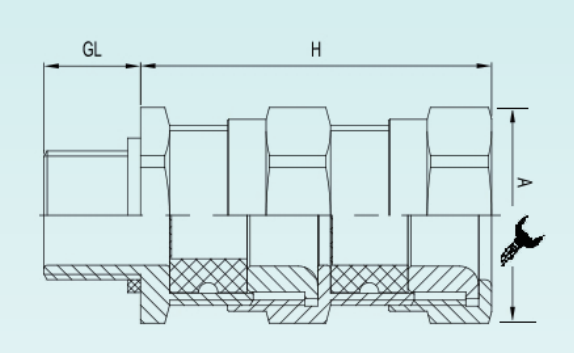
1-Gland for flexible cable
Key Selection Considerations
Cable Diameter
The cable gland must match the cable's outer diameter to ensure proper sealing and strain relief.
Cable Movement
Applications involving vibration or repeated movement require fittings that can maintain sealing performance without damaging the cable.
Hazardous Area Classification
The gland should be selected according to the protection concept and area classification, such as Ex d or Ex e installations.
Explosion Proof Fittings for Armored Cables
Armored cables require specialized cable glands designed to secure both the cable sheath and the armor layer.
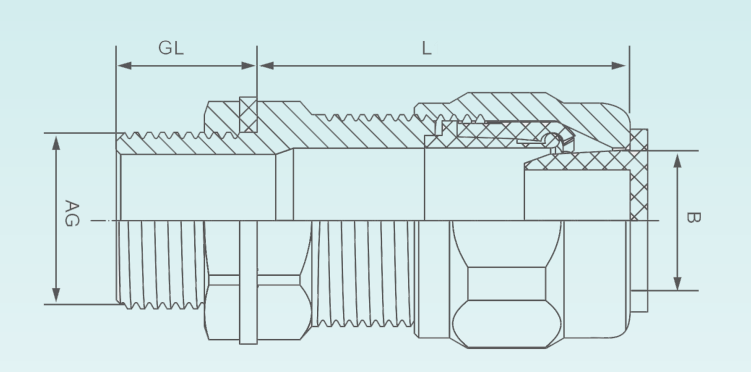
2-Gland for armored cable
Armor Clamping
A suitable armored cable gland must provide a reliable mechanical connection to the armor while maintaining electrical continuity for grounding purposes.
Double Compression Cable Glands
Double compression cable glands are widely used in hazardous areas because they seal both the inner bedding and the outer cable sheath.
Benefits include improved sealing performance, better mechanical retention, and enhanced environmental protection.
Barrier Glands
For certain flameproof (Ex d) applications, particularly where gas migration is a concern, barrier cable glands may be required.
Barrier glands use a sealing compound to prevent the passage of gases through the cable entry system, providing an additional level of protection.
Flexible Cable vs. Armored Cable Fittings Comparison
Feature | Flexible Cable | Armored Cable |
Mechanical Protection | Lower | Higher |
Cable Flexibility | High | Limited |
Grounding Requirement | Typically not required | Armor grounding required |
Common Gland Type | Compression gland | Double compression gland |
Installation Complexity | Lower | Higher |
Offshore Suitability | Moderate | Excellent |
Common Selection Mistakes
Using Non-Armored Glands on Armored Cables
One of the most common mistakes is using cable glands designed for non-armored cables on armored cable installations. Armored cable glands are specifically designed to strip, clamp, and secure the armor layer while maintaining proper sealing at the cable entry point.
A standard non-armored gland cannot effectively terminate the armor or provide mechanical retention for the armored layer. As a result, the cable may not be adequately secured, and the sealing performance can be compromised. In hazardous areas, this may affect ingress protection and reduce the overall reliability of the installation.
Ignoring Grounding and Bonding Requirements
For armored cables, the armor often serves as part of the grounding and bonding system. Failure to establish proper electrical continuity between the armor and the equipment enclosure can create safety risks and may lead to non-compliance with applicable installation standards.
When selecting explosion proof fittings for armored cables, engineers should ensure that the gland provides a reliable armor clamping mechanism capable of maintaining long-term grounding continuity.
Using General Industrial Glands in Hazardous Areas
Cable glands used in ordinary industrial environments are not automatically suitable for hazardous locations. Explosion proof installations require cable entry devices that have been tested and certified for the intended protection concept, such as Ex d or Ex e.
Using uncertified glands in hazardous areas may compromise the integrity of the explosion protection system and could result in non-compliance with project specifications and regulatory requirements.
Standards and Certification Requirements
Compliance with recognized international standards is an essential part of explosion proof fitting selection. Engineers should verify that cable glands and associated fittings are designed and tested in accordance with the relevant requirements of the IEC 60079 series, which governs equipment and installations used in explosive atmospheres. These standards define key requirements for general equipment design, flameproof enclosures, increased safety equipment, and hazardous area installation practices.
In addition to meeting technical standards, products should carry appropriate third-party certification for the target market. IECEx certification is widely accepted for international projects, while ATEX certification is required for equipment installed within the European Union. Verifying certification ensures that the selected fitting has been independently assessed for safe use in the intended hazardous environment.
Choosing the Right Explosion Proof Fitting
The correct fitting depends on both the cable type and the installation environment.
For offshore and heavy industrial applications, armored cables with double compression or barrier glands are often preferred due to their superior mechanical protection.
For lighting, instrumentation, and equipment requiring flexibility, properly certified compression glands for flexible cables may provide a more practical solution.
By considering cable construction, hazardous area classification, and certification requirements, engineers can ensure safe and reliable operation throughout the life of the installation.
Conclusion
Selecting explosion proof fittings for flexible and armored cables is a critical aspect of hazardous area design. Because each cable type presents different sealing, grounding, and mechanical challenges, the cable gland should always be selected according to the cable structure and the applicable explosion protection requirements.
Proper selection not only ensures compliance with industry standards but also improves long-term safety and reliability in demanding industrial environments.


 English
  Español
  português
  русский
  日本語
日本語  العربية
  français
  Deutsch
  한국어
한국어  italiano
  Malay
Malay 
 ATEX/IECEx Standard
 Each member of the SUREALL team works hard to save energy, reduce budget, maximize durability, bring success to every project for every customer. Here are just a few examples of how we've impacted the markets we're proud to serve.View More +