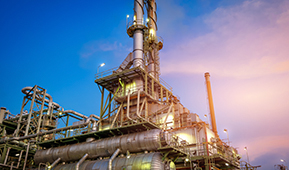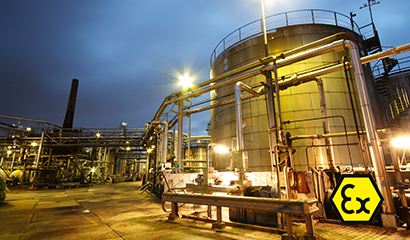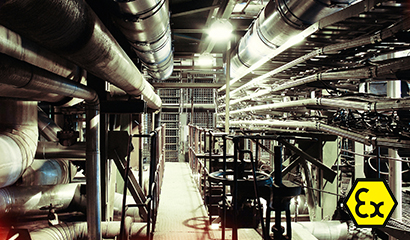
An Ex-proof panel (explosion-proof control panel or distribution panel) is an electrical enclosure specially designed for use in hazardous areas where flammable gases, vapors, or combustible dust may be present. Such environments are commonly found in industries such as oil and gas, chemical processing, pharmaceuticals, mining, and grain handling.
In these environments, ordinary electrical equipment may generate sparks, arcs, or high surface temperatures during operation. If these ignition sources come into contact with flammable substances in the atmosphere, an explosion may occur. Explosion-proof panels are therefore designed with specialized structures and protection methods to prevent electrical equipment from becoming an ignition source, ensuring both operational safety and personnel protection.
In addition to performing basic power distribution or equipment control functions, explosion-proof panels must comply with relevant hazardous area standards and obtain certifications such as UL, ATEX, or IECEx, ensuring safe and reliable operation in hazardous environments.
Main Functions of Explosion-Proof Panels
Depending on the application, explosion-proof panels are generally divided into two main categories: Distribution Boards (DB) and Control Boxes (CB). These two types differ in both function and internal configuration.
Explosion-Proof Distribution Board (DB)
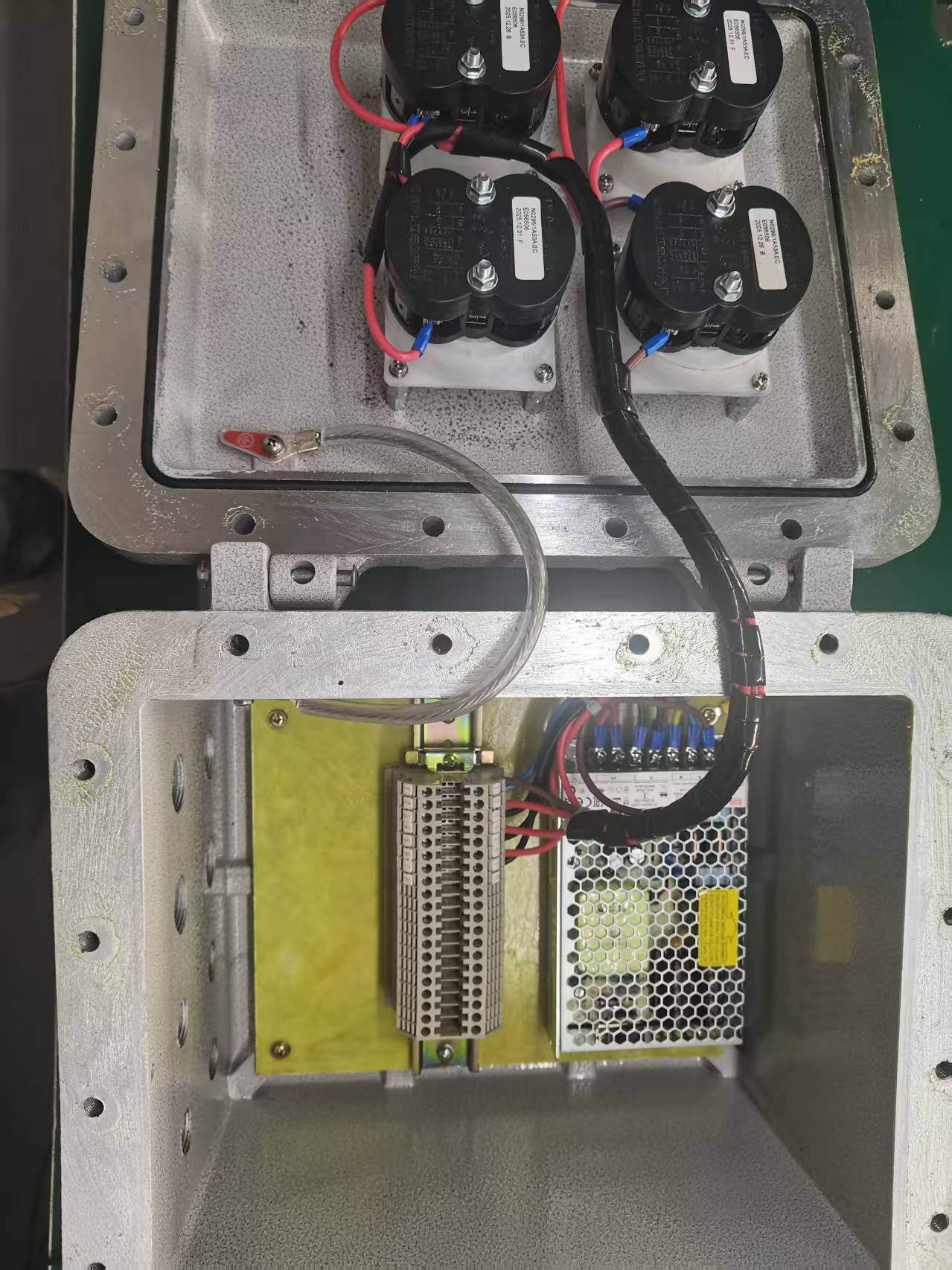
An explosion-proof distribution board is mainly used for power distribution and circuit protection. Its function is to divide the incoming power supply into multiple electrical circuits and provide stable power to field equipment.
Typical internal components include:
MCB (Miniature Circuit Breaker) or MCCB (Molded Case Circuit Breaker) for overload and short-circuit protection
Terminal blocks for cable connections
Busbars for power distribution
Surge Protection Devices (SPD) to protect equipment from voltage surges
Fuses for additional overcurrent protection of branch circuits
Ammeters or voltmeters used to monitor current and voltage conditions of the power system
Power transformers for voltage conversion or auxiliary power supply within the system
A distribution board usually acts as a centralized power distribution point in the field power system. It divides the main power supply into several branch circuits, with each circuit protected by a breaker. Because its primary function is power distribution, the internal structure is relatively simple, focusing mainly on electrical protection and system reliability.
Explosion-Proof Control Box (CB)
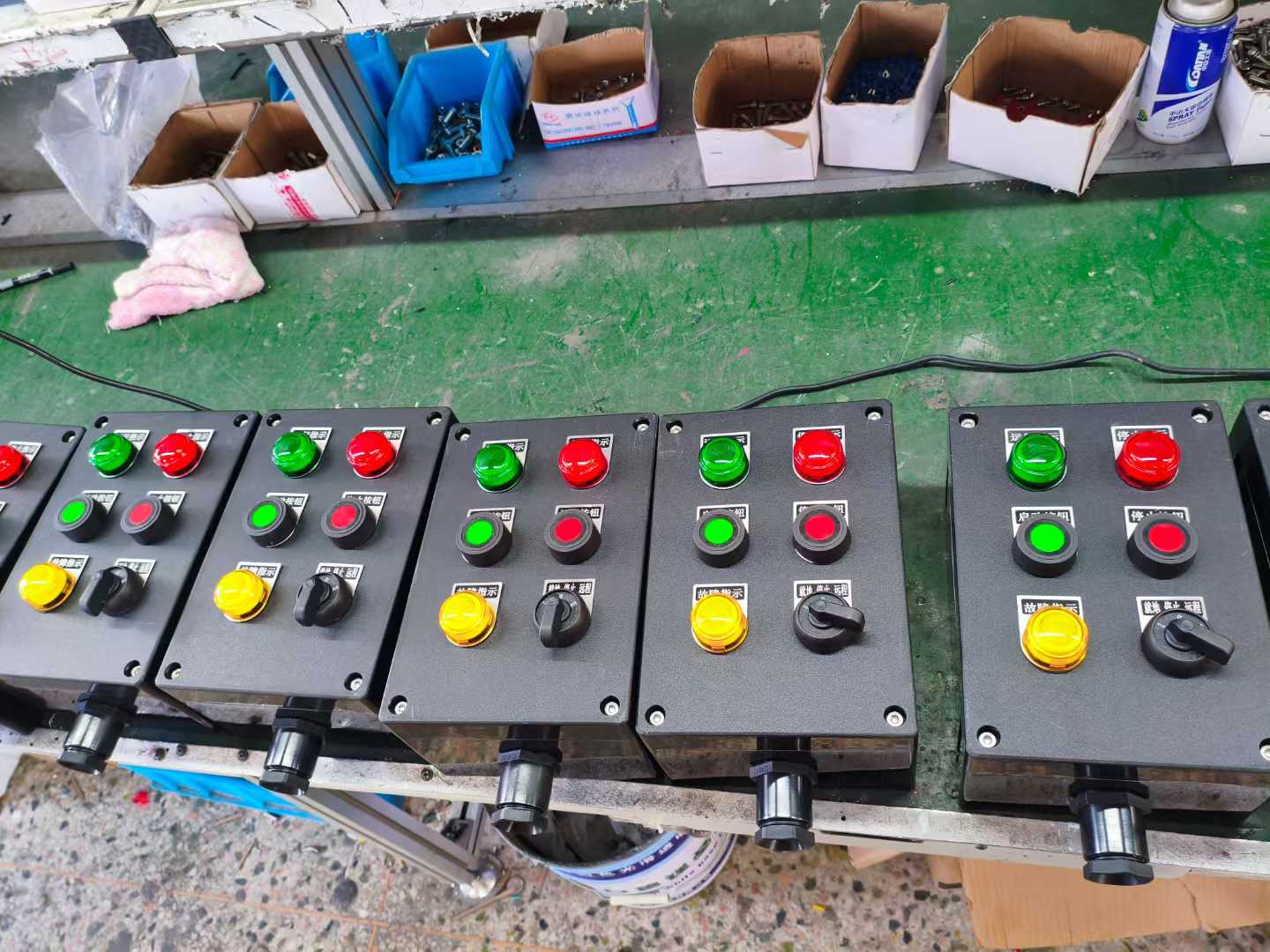
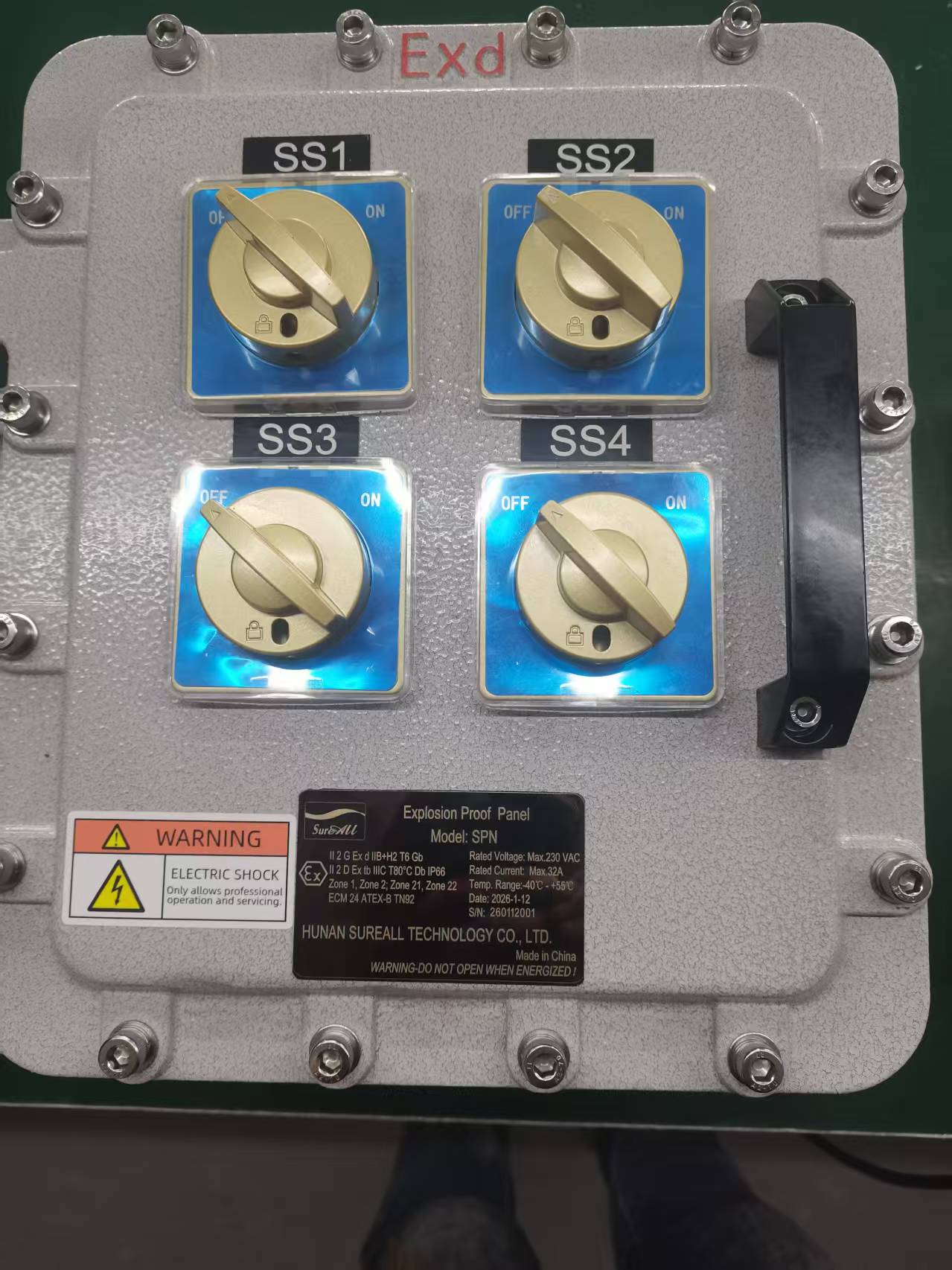
Unlike distribution boards, an explosion-proof control box is mainly used for equipment control and status monitoring. It is typically used to control the start and stop of field equipment, display operating status, and operate automation systems.
Since an operator interface is required, control boxes usually have more operating components installed on the panel.
Typical components installed inside or on the panel include:
Selector switches for selecting different operating modes or control functions
Push buttons for starting, stopping, or resetting equipment
Indicator lights for displaying equipment status and operating conditions
Relays or contactors for switching and controlling electrical loads
Control modules or PLCs for executing automation logic and system control
Terminal blocks for field wiring and signal connections
Timers for time-delay operations in automated control sequences
Thermal relays for motor overload protection
Analog or digital instruments for monitoring operating parameters such as voltage, current, or process signals
Through these components, operators can safely control equipment in hazardous areas, such as starting motors, stopping machinery, or monitoring system status.
Common Explosion Protection Types for Panels
To meet the safety requirements of hazardous areas, explosion-proof panels must adopt specific explosion protection types during design. In industrial applications, common protection methods include Ex d (flameproof), Ex de (combined flameproof and increased safety), as well as Ex e (increased safety) or Ex ed combined structures.
Each protection type has different characteristics in terms of structural design, internal component arrangement, and application scenarios.
Ex d – Flameproof Compartment Design
Ex d (flameproof) is one of the most commonly used protection types for explosion-proof panels. It is to use a mechanically strong enclosure that contains electrical components capable of producing sparks or arcs within a compartment that can withstand internal explosion pressure.
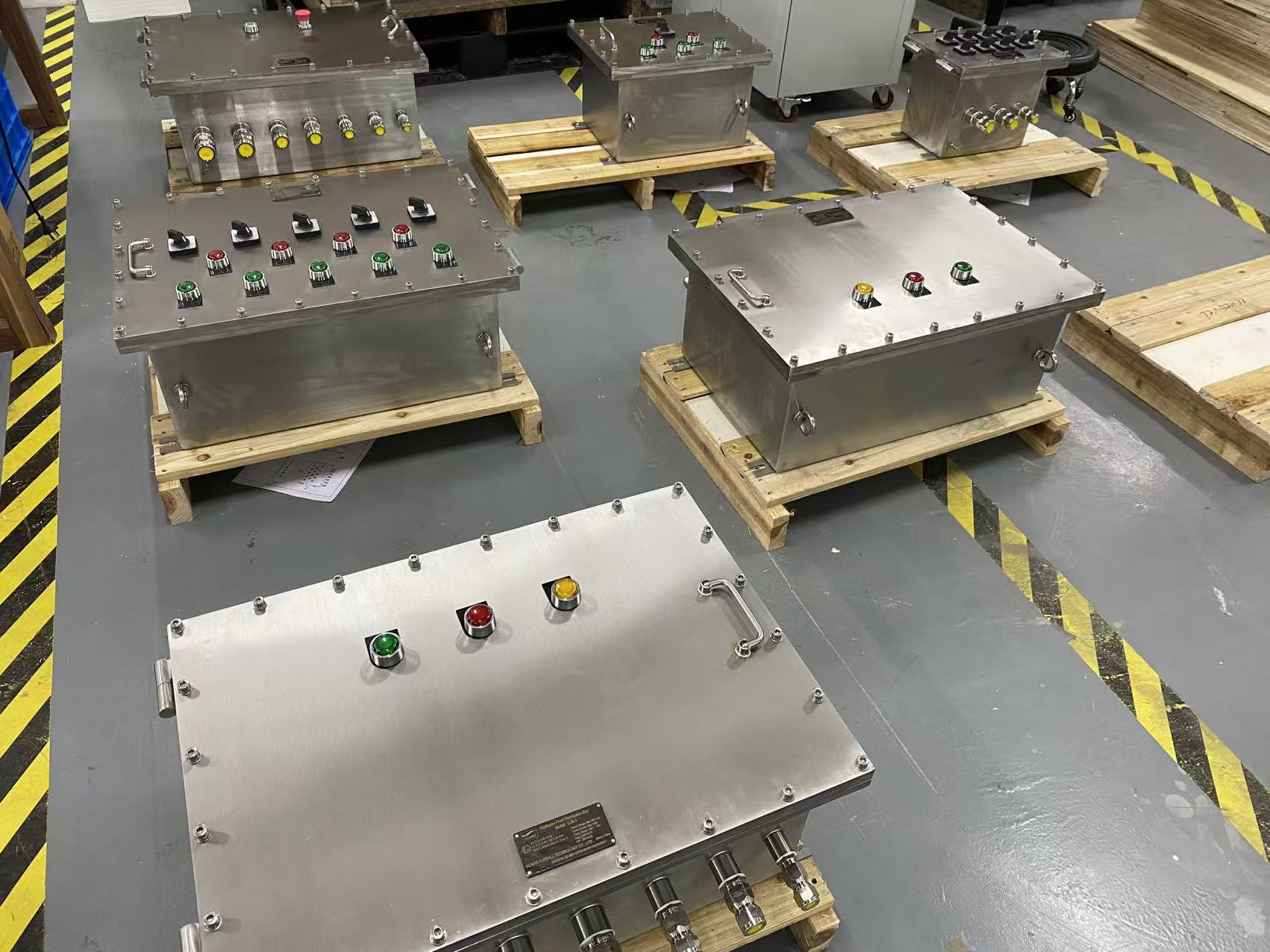
Structural Features
Flameproof structures typically use thick-walled enclosures with precisely machined flame paths at the enclosure joints. If an explosion occurs inside the equipment, the enclosure can withstand the internal pressure while the flame path restricts the propagation of flames. This design allows hot gases to cool before escaping, preventing ignition of the surrounding explosive atmosphere.
This structure effectively controls the impact of internal explosions on the external environment and is therefore suitable for electrical equipment that may generate ignition sources.
Common Materials
Because the enclosure must withstand high mechanical pressure, Ex d panels are usually made from high-strength materials such as:
Aluminum – lightweight with good heat dissipation, widely used in industrial explosion-proof equipment
Stainless steel – offers excellent corrosion resistance, suitable for chemical or marine environments
Welded carbon steel – commonly used for larger explosion-proof control cabinets
Material selection usually depends on the installation environment and corrosion resistance requirements.
Typical Components
In explosion-proof panels, the Ex d compartment is typically used to install electrical components that may generate sparks or arcs, such as:
These components may produce electrical arcs during operation or switching, and therefore must be installed inside a flameproof enclosure to prevent ignition of hazardous gases.
Application in Panels
In flameproof panel designs, operating devices such as push buttons, selector switches, and indicator lights are mounted on the enclosure and connected to internal components through flameproof operating mechanisms. This allows operators to control equipment while maintaining the explosion-proof integrity of the enclosure.
Such panels are widely used in hazardous industrial environments where flammable gases or vapors may be present.
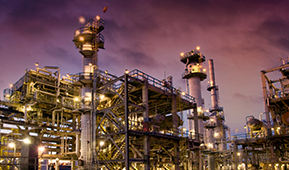
In oil and gas facilities, for example, explosion-proof distribution panels are often installed in areas such as refinery pump stations, tank farms, or offshore platform processing modules. These panels distribute power to pumps, motors, and field instruments. Because combustible gases may be present in these locations, the DB is typically equipped with protective components such as MCCBs, contactors, and monitoring meters to ensure reliable power distribution and equipment protection.
Similarly, in chemical processing plants, explosion-proof panels are commonly used in reactor units or solvent handling areas where volatile vapors may accumulate. In these environments, the panels distribute and control electrical circuits for equipment such as mixers, ventilation systems, and other process machinery, while the flameproof enclosure ensures that any internal sparks cannot ignite the surrounding hazardous atmosphere.
Ex de – Combined Flameproof and Increased Safety Design
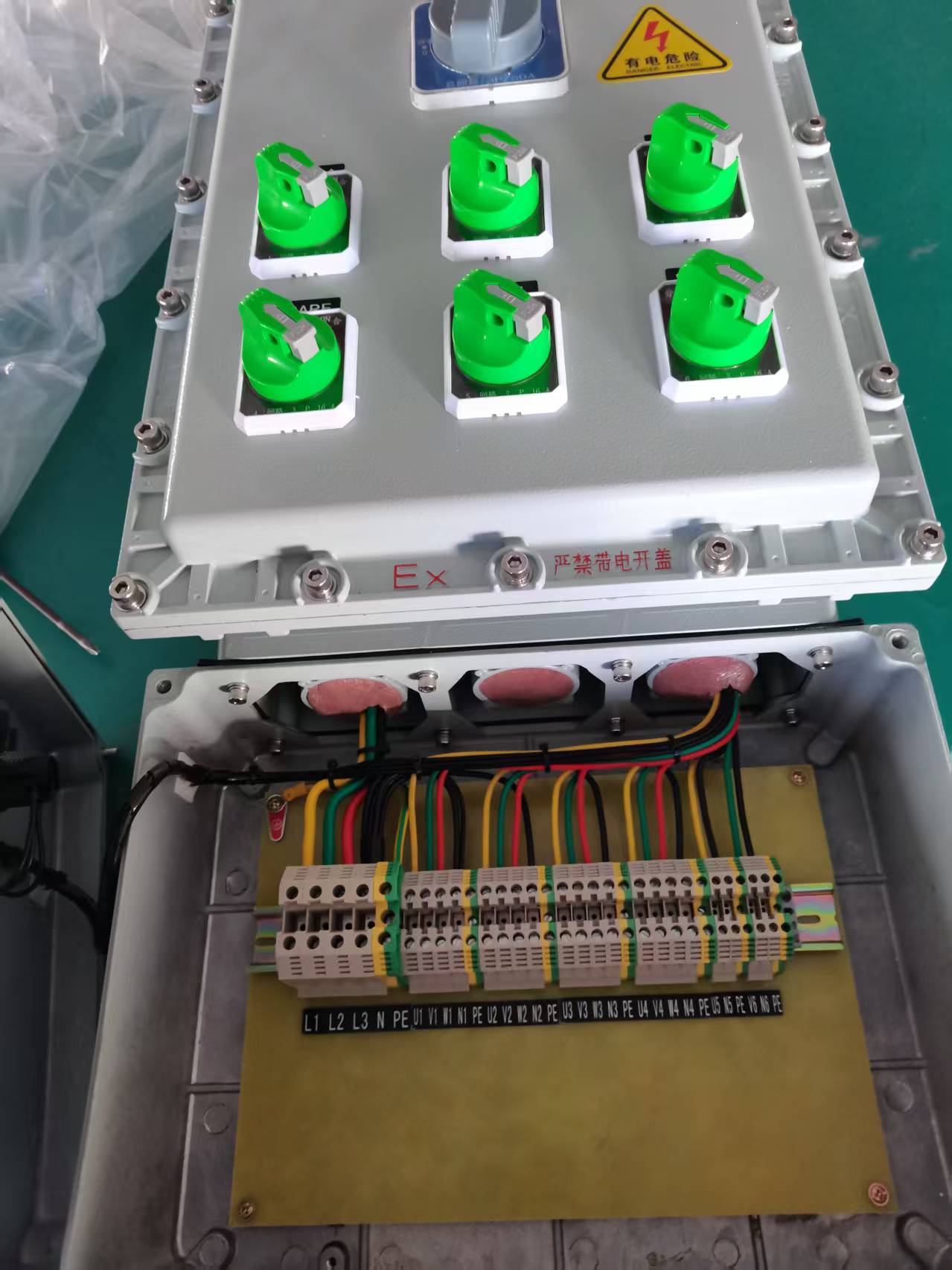
In many industrial applications, a single explosion protection method cannot fully meet both equipment installation and wiring requirements. For this reason, explosion-proof panels often adopt an Ex de combined design, integrating flameproof protection (Ex d) with increased safety protection (Ex e).
Why a Combined Protection Design Is Needed
Designing the entire panel as Ex d would allow safe containment of components that may generate sparks or arcs. However, flameproof enclosures are typically thick and heavy, which makes opening the panel, routing cables, and performing maintenance more labor-intensive.
By adopting a combined Ex de design, electrical components that require flameproof containment are installed in the Ex d compartments, while other components can be installed in Ex e sections. This approach simplifies wiring and maintenance, as the separation allows for clear and organized cable routing, easier access for adjustments, and more convenient component replacement. Additionally, the combined design is more cost-effective, because only the sections that truly require Ex d protection need the heavier, more expensive flameproof enclosure, while other parts can use the lighter Ex e compartments.
Overall, this modular approach not only reduces installation and maintenance labor, but also creates a neater, more organized panel layout that is easier for operators to handle and inspect.
For projects that require breakers, contactors, monitoring devices or PLC functions, review SUREALL's explosion proof panel configurations before finalizing an Ex d or Ex de design.
Dual-Compartment Structure/multi-compartment
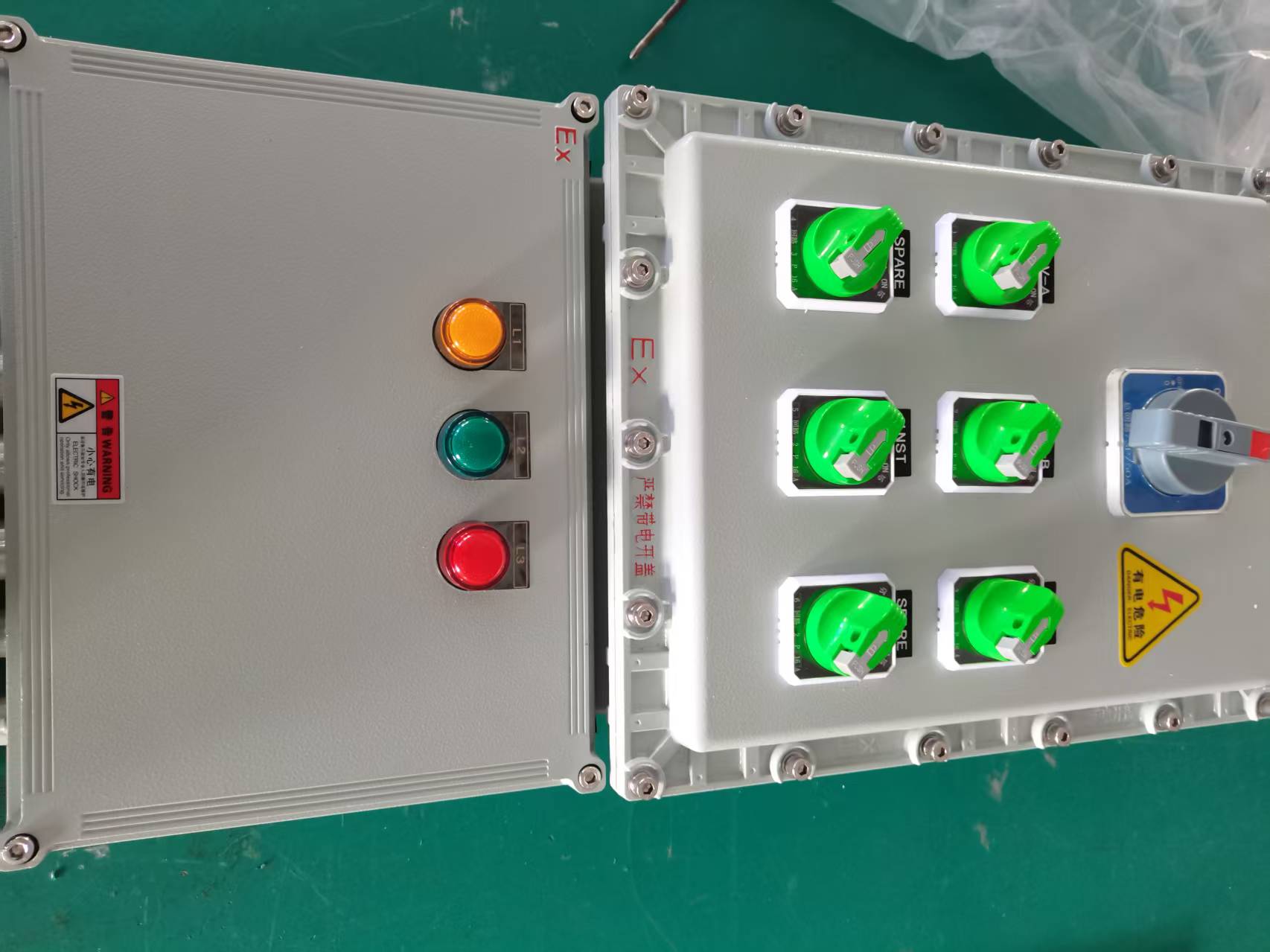
A typical Ex de explosion-proof panel adopts a dual-compartment design. In this structure, the panel is divided into two separate sections:
Ex d flameproof compartment – used to install electrical components that may generate sparks or arcs
Ex e increased safety terminal compartment – used for cable entry, terminal connections, and wiring
This design is commonly implemented using two connected enclosures, with one side serving as the flameproof housing and the other as the increased safety wiring compartment. This arrangement maintains explosion protection while improving accessibility for wiring and maintenance.
Component Arrangement
In an Ex de panel, components are arranged according to their potential ignition risk.
Typically, components installed in the Ex d flameproof compartment include:
The Ex e increased safety compartment is mainly used for:
This separation of components ensures that spark-producing devices are safely contained while providing sufficient space for field wiring.
Cable Entry and Wiring Advantages
Another important advantage of the Ex de structure is improved cable management. Since terminal blocks are installed in the increased safety compartment, cables can enter through explosion-proof cable glands and be connected directly to the terminals without requiring complex wiring inside the flameproof compartment.
This design not only improves installation efficiency but also simplifies maintenance and inspection.
Ex e / Ex ed – Increased Safety Based Designs
In certain applications, explosion-proof panels may also adopt Ex e (increased safety) or Ex ed combined protection. However, compared with Ex d or Ex de designs, these configurations are relatively less common in industrial control panels.
Applications of Ex e Panels
The design principle of Ex e (increased safety) equipment is to prevent the occurrence of sparks, arcs, or dangerous surface temperatures through improved insulation, reliable wiring, and controlled temperature rise.
For this reason, panels designed with Ex e protection are typically used in applications where no sparking components are present, such as:
In these types of equipment, the internal components mainly include terminal blocks, busbars, or other non-sparking devices, allowing explosion protection to be achieved through increased safety design.
Ex ed Combined Structure
In some certification markings, the designation Ex ed may also appear. This marking generally indicates that the equipment uses both increased safety (Ex e) and flameproof (Ex d) protection methods, with the order simply reflecting the certification notation.
In certain specialized designs, flameproof modules or components may be installed within an increased safety enclosure, resulting in such a combined structure. However, this type of configuration is relatively uncommon in explosion-proof control panels.
Why Panels Rarely Use a Pure Ex e Design
In industrial control systems, most panels need to include electrical components such as circuit breakers, contactors, or relays, which may generate arcs or sparks during operation. Since the Ex e protection concept does not permit the presence of potential ignition sources, these components cannot be directly installed in a pure Ex e enclosure. In addition, Ex e equipment must meet strict requirements for electrical clearance, creepage distances, and insulation, which can significantly increase the overall size of complex control panels.
For distribution boards (DBs), which typically handle higher currents to supply power to field equipment, the presence of MCBs, MCCBs, and other protective devices makes it impractical to use a pure Ex e enclosure. The need to safely manage large currents and maintain reliable protection generally necessitates Ex d or Ex de designs.
For control boxes (CBs), which often include lower-power control and monitoring devices, pure Ex e enclosures can sometimes be used for non-arc-generating components. However, for critical elements such as relays, contactors, or automation modules, small Ex d compartments may be integrated inside the Ex e shell. This hybrid arrangement allows the panel to maintain increased safety for the overall enclosure while safely containing components that could produce sparks or arcs.
Therefore, in practical engineering applications, most explosion-proof panels are designed using Ex d or combined Ex de structures, providing flexibility in equipment configuration while ensuring compliance with explosion protection requirements.
Explosion-Proof Certifications and Standards
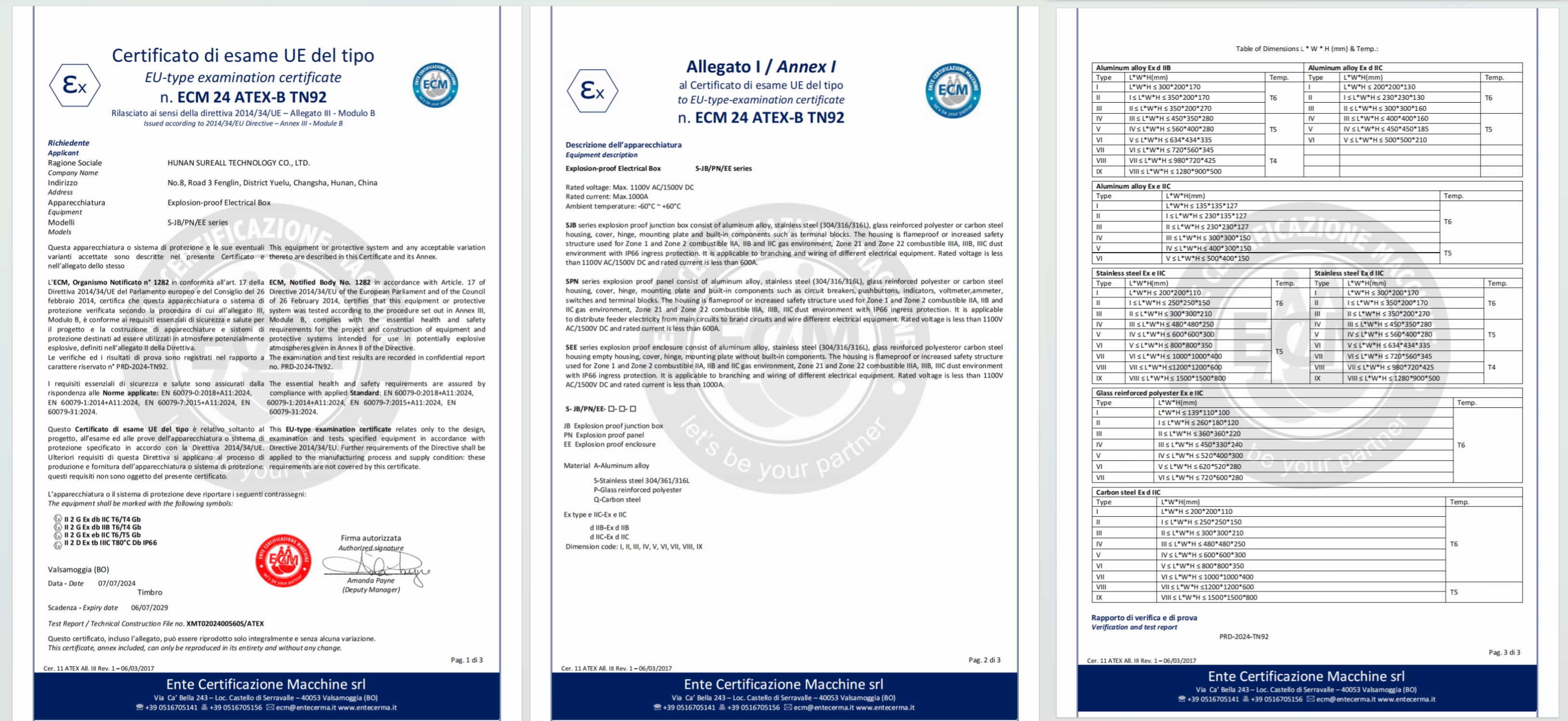
To ensure safe operation in hazardous environments, explosion-proof panels must comply with relevant international certification standards.
Common certification systems include:
ATEX – The European directive for equipment used in explosive atmospheres, required for the European market
IECEx – An international certification scheme widely recognized in many countries and regions
UL / NEC – Hazardous location electrical standards commonly used in North America


 English
  Español
  português
  русский
  日本語
日本語  العربية
  français
  Deutsch
  한국어
한국어  italiano
  Malay
Malay 
 ATEX/IECEx Standard
 Each member of the SUREALL team works hard to save energy, reduce budget, maximize durability, bring success to every project for every customer. Here are just a few examples of how we've impacted the markets we're proud to serve.View More +