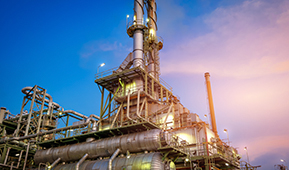
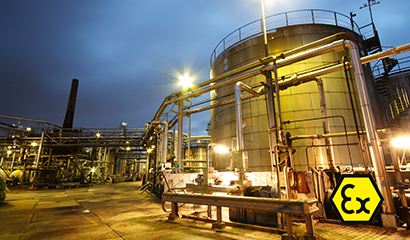
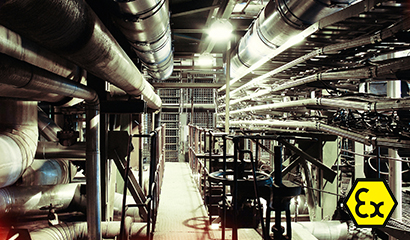
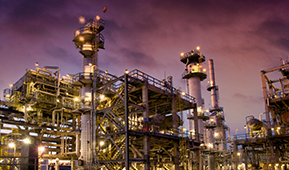
Explosion proof lighting plays a critical role in hazardous industrial environments, providing safe and reliable illumination in locations where flammable gases, vapors, or combustible dust may be present. These luminaires are widely used in offshore oil and gas platforms, petrochemical plants, chemical processing facilities, marine terminals, wastewater treatment plants, and other industrial applications.
While explosion protection is often the primary consideration when selecting lighting equipment for hazardous areas, corrosion remains one of the most significant factors affecting long-term reliability. In many coastal and chemical environments, corrosion-related failures occur long before the end of a luminaire’s expected service life. Degradation of housing materials, fasteners, cable entries, and sealing components can compromise not only equipment durability but also ingress protection and explosion protection performance.
To ensure safe and reliable operation throughout the product lifecycle, corrosion protection must be considered during material selection, coating system design, equipment construction, and maintenance planning. This article explores practical corrosion protection strategies for explosion proof lighting installed in highly corrosive coastal and chemical environments.
Why Corrosion Is a Major Challenge for Explosion Proof Lighting
Industrial hazardous environments often expose equipment to aggressive corrosive agents that accelerate material degradation.
Coastal and Offshore Environments
Coastal and offshore installations are continuously exposed to Salt spray, High humidity, Windborne chlorides, UV radiation, and Temperature fluctuations.
Among these factors, chloride contamination is particularly damaging to metallic surfaces. Chloride ions can penetrate protective oxide layers and initiate localized corrosion, especially on aluminum alloys and stainless steel components.
Offshore platforms present even greater challenges because equipment is exposed to salt-laden air around the clock, often combined with elevated temperatures and strong winds.
Chemical Processing Environments
Chemical plants present a different but equally severe corrosion risk.
Potential corrosive substances include Acid vapors, Alkaline chemicals, Sulfur compounds, Chlorinated chemicals, Industrial solvents
These contaminants can attack both metallic materials and protective coatings, leading to premature deterioration of equipment surfaces and sealing systems.
Critical Components Vulnerable to Corrosion
Corrosion does not affect all parts of an explosion proof luminaire equally. Certain components are particularly vulnerable and require special attention during design and selection.
Housing and Enclosure
The enclosure serves as the primary barrier protecting internal electrical components.
Common housing materials include: Aluminum alloys, Stainless steel, and Glass-reinforced polyester (GRP).
Corrosion of the housing can lead to Reduced structural integrity, Surface degradation, Coating failure, and Reduced thermal performance
Fasteners and Mounting Hardware
Fasteners are often overlooked but represent one of the most common corrosion points.
Corroded bolts and screws may cause Difficult maintenance, Mechanical failure, and Reduced enclosure integrity.
For corrosive environments, stainless steel fasteners are generally preferred.
Cable Glands and Cable Entries
Cable glands are continuously exposed to moisture and chemical contaminants.
Corrosion in cable entry systems may result in Loss of sealing effectiveness, Reduced IP protection, and Increased risk of water ingress.
Explosion-Proof Flamepaths
One of the most critical areas is the explosion-proof joint, often referred to as the flamepath.
Excessive corrosion can affect Joint dimensions, Surface finish, and Mechanical integrity.
Because flamepaths are essential to containing internal explosions, maintaining their condition is critical for continued compliance with explosion protection requirements.
Material Selection Strategies
Proper material selection is the first line of defense against corrosion. The choice of enclosure material directly influences the long-term reliability and maintenance requirements of explosion proof lighting installed in harsh environments.
Aluminum Alloy Housings
Aluminum alloys are widely used in explosion proof lighting due to their low weight, excellent thermal conductivity, and ease of manufacturing. However, in chloride-rich coastal and offshore environments, aluminum surfaces can be susceptible to localized pitting corrosion. To enhance durability, aluminum housings are typically protected through anodizing, powder coating, or other multi-layer protective coating systems that provide an additional barrier against moisture and salt exposure.
304 Stainless Steel
304 stainless steel offers good corrosion resistance and mechanical strength for many industrial applications, making it a common material choice for hazardous area equipment. While it performs well in moderate industrial environments, prolonged exposure to high concentrations of chlorides may eventually lead to pitting corrosion, limiting its suitability for more aggressive marine conditions.
316L Stainless Steel
For coastal, offshore, and other highly corrosive environments, 316L stainless steel is generally regarded as the preferred metallic material. The addition of molybdenum significantly improves resistance to chloride attack, pitting corrosion, and crevice corrosion. Although the initial investment is higher than that of 304 stainless steel, the improved durability and reduced maintenance requirements often result in lower lifecycle costs.
GRP and Composite Materials
Non-metallic materials such as glass-reinforced polyester (GRP) provide excellent resistance to many corrosive chemicals and eliminate concerns related to rust formation. These materials are particularly attractive in environments where chemical exposure is severe. However, factors such as mechanical strength, UV resistance, and heat dissipation should still be carefully evaluated when selecting composite enclosures for explosion proof lighting applications.
Protective Coating Systems Based on ISO 12944
Material selection alone is rarely sufficient in severe industrial environments. Protective coating systems provide an additional barrier against corrosive agents and significantly extend service life.
Understanding Corrosivity Categories
ISO 12944 provides internationally recognized guidance for evaluating atmospheric corrosion severity and selecting appropriate protective coating systems.
Environmental classification allows engineers to match coating performance to expected service conditions.
Category
| Typical Environment | Corrosivity Level |
C1 | Heated buildings with clean atmosphere | Very Low |
C2 | Rural areas, unheated buildings | Low |
C3 | Urban and light industrial areas | Medium |
C4 | Coastal industrial areas | High |
C5 | Offshore and aggressive industrial environments | Very High |
CX | Extreme offshore and severe industrial exposure | Extreme |
ISO 12944 provides numerous coating system combinations for different corrosivity categories and durability requirements. Rather than prescribing a single solution, the standard allows engineers to select coating systems based on environmental severity, substrate material, and expected service life. For explosion proof lighting installed in coastal and offshore environments, multi-layer epoxy and polyurethane systems are commonly adopted to achieve long-term corrosion protection.
Design Strategies Beyond Material and Coating
Corrosion protection should not rely solely on material selection and coating systems. Product design also plays a critical role in determining the long-term durability of explosion proof lighting. Effective enclosure design should minimize water accumulation by incorporating sloped surfaces, drainage features, and smooth geometries that prevent moisture from remaining on exposed surfaces. Designers should also reduce the formation of crevices and moisture traps, as these localized areas can retain contaminants and create conditions that accelerate corrosion. In addition, careful attention should be given to the prevention of galvanic corrosion, which may occur when dissimilar metals are electrically connected in the presence of moisture or other electrolytes. Appropriate material pairing and isolation methods can significantly reduce this risk.
Another important consideration is sealing performance. High-quality sealing systems help prevent the ingress of moisture, salt spray, and chemical contaminants that can damage both external and internal components. Gaskets, O-rings, and cable gland seals should be selected according to the environmental conditions and expected chemical exposure. Ensuring compatibility between sealing materials and the operating environment can improve long-term reliability, maintain ingress protection performance, and reduce maintenance requirements throughout the service life of the equipment.
Inspection and Maintenance Considerations
Even the best corrosion protection system requires periodic inspection and maintenance.
Routine inspections should focus on:
Coating damage
Surface corrosion
Fastener condition
Cable gland integrity
Seal degradation
Flamepath condition
Early detection of coating defects or localized corrosion can significantly reduce repair costs and extend equipment service life.
For offshore and chemical facilities, corrosion inspections should be incorporated into regular preventive maintenance programs.
Conclusion
Corrosion protection is a critical consideration for explosion proof lighting operating in coastal and chemical environments, where exposure to salt spray, humidity, and aggressive chemicals can significantly shorten equipment lifespan. A comprehensive protection strategy should combine appropriate material selection, effective coating systems, corrosion-conscious design, and regular maintenance practices. By adopting this multi-layer approach, operators can enhance equipment reliability, extend service life, reduce maintenance costs, and maintain safe operation in demanding hazardous area applications.


 English
  Español
  português
  русский
  日本語
日本語  العربية
  français
  Deutsch
  한국어
한국어  italiano
  Malay
Malay 
 ATEX/IECEx Standard
 Each member of the SUREALL team works hard to save energy, reduce budget, maximize durability, bring success to every project for every customer. Here are just a few examples of how we've impacted the markets we're proud to serve.View More +