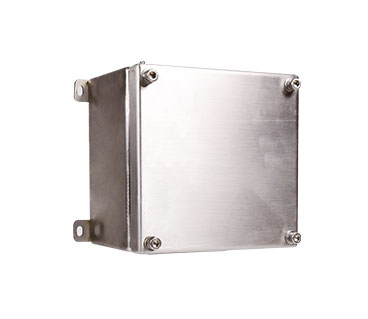
An explosion proof enclosure is a specially engineered housing designed to contain internal sparks or explosions and prevent ignition of hazardous gases, vapors, or dust in dangerous environments. Choosing the right one depends on your hazard classification (such as Class 1 Division 2), required certifications (ATEX, IECEx, NEC), environmental rating (IP66, NEMA 4X), and application type (junction box, control panel, disconnect, or terminal box).
If you operate in oil & gas, chemical processing, marine terminals, grain facilities, or battery plants, selecting the wrong enclosure can lead to costly downtime — or worse, catastrophic safety risks. In this guide, we’ll break down everything you need to know in 2026 about explosion proof enclosures, hazardous location compliance, and how to match the right enclosure to your application.
Understanding Explosion Proof Enclosures in Hazardous Locations
The term explosion proof enclosure is often misunderstood. It does not mean the enclosure prevents explosions from happening. Instead, it means:
It can withstand an internal explosion.
It prevents flames or sparks from escaping.
It maintains structural integrity under pressure.
This distinction is critical when specifying:
Explosion proof switch box
Explosion proof junction box
Explosion proof control panel
Explosion proof panel board
Explosion proof disconnect
Hazardous Area Classifications Explained
Before selecting any hazardous location enclosures, you must understand classification systems.
North American NEC System
Class 1: Flammable gases or vapors
Class 2: Combustible dust
Division 1: Hazard present under normal conditions
Division 2: Hazard present under abnormal conditions
A Class 1 Division 2 enclosure (C1D2 enclosure) is commonly used in environments where explosive gases are not normally present but may appear due to leaks or system failure.
Common searches in 2025–2026 include:
class 1 div 2 enclosure
class 1 division 2 junction box
c1d2 enclosure with window
stainless steel nema 4x c1d2 enclosure
IEC / ATEX / IECEx System
Outside North America, hazardous areas are classified as:
For example:
Ex e terminal box (Increased Safety type)
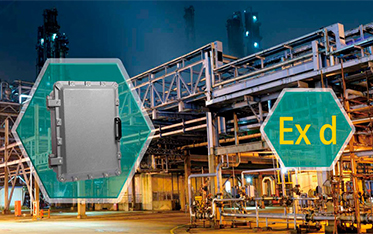
Ex d flameproof enclosure
Ex m encapsulated enclosure
Global projects often require dual certification for export compliance.
Explosion Proof vs NEMA 4X vs IP66: What’s the Difference?
Many engineers confuse environmental ratings with hazardous ratings. They are not the same.
NEMA 4X Stainless Steel Enclosure
A NEMA 4X enclosure protects against:
Corrosion
Hose-directed water
Outdoor exposure
Ice formation
It is commonly used in marine, food processing, and chemical plants.
However, NEMA 4X alone does NOT guarantee explosion protection.
IP66 Enclosure
An IP66 enclosure provides:
Again, IP66 ≠ explosion proof unless specifically certified.
When Do You Need Both?
In real-world 2026 industrial applications, it is common to require:
This is especially important for:
Types of Explosion Proof Electrical Boxes and Panels
Explosion proof equipment comes in multiple configurations depending on system complexity.
1. Explosion Proof Junction Box
Used to connect wiring in hazardous areas. Modern designs include:
Terminal block integration
Window viewing panels
Stainless steel construction
Ex e terminal box configurations
High-demand search terms:
junction box with terminal block
explosion proof electrical box
hazardous location junction box
class 1 division 2 junction box
2. Explosion Proof Switch Box & Disconnect
These allow safe power control in hazardous zones.
In 2026, industrial buyers are prioritizing:
3. Explosion Proof Control Panel & Panel Board
Used for system-level automation control.
Emerging 2025–2026 trend:
Integration of smart sensors and IoT modules into hazardous-rated panels.
4. Explosion Proof Enclosure with Window
Often used for:
Monitoring gauges
HMI displays
Indicator lights
Modern versions use:
What Is a C1D2 Enclosure and When Should You Use It?
A C1D2 enclosure is used in environments where flammable gases are not continuously present but may exist during abnormal conditions.
Common examples:
Advantages:
Lower cost than Division 1 systems
Easier maintenance access
Wide availability in stainless steel NEMA 4X options
Search growth in 2025–2026 shows increased demand for:
C1D2 stainless steel enclosure
Class 1 Div 2 enclosure with window
C1D2 control panel
Hazardous location enclosures for hydrogen projects
Hydrogen energy infrastructure expansion is a key driver.
Materials: Why Stainless Steel Is Dominating 2026 Projects
Explosion proof enclosures are typically made from:
Stainless steel NEMA 4X enclosures are now preferred because they:
Food & pharma industries particularly require:
Electrical Equipment in Hazardous Areas: 2026 Compliance Checklist
Before purchasing explosion proof equipment, verify:
✔ Hazard classification
✔ NEC or IEC compliance
✔ Temperature code (T rating)
✔ NEMA or IP environmental rating
✔ Material compatibility
✔ Cable gland compatibility
✔ Internal heat dissipation
✔ Window impact certification (if applicable)
Electrical equipment in hazardous areas must be carefully engineered to prevent ignition risks caused by:
Electrical arcs
High surface temperature
Static discharge
Short circuits
Improper enclosure sizing is one of the top failure points in industrial audits.
How to Choose the Right Explosion Proof Enclosure Manufacturer
When searching for junction box manufacturers or hazardous location enclosure suppliers, evaluate:
In-house certification capability
Custom engineering support
Short lead times
Stainless steel fabrication expertise
International export experience
Explosion testing documentation
In 2026, procurement teams prioritize manufacturers who provide:
FAQs (People Also Ask in 2025–2026)
1. What is the difference between explosion proof and flameproof?
In North America, “explosion proof” is commonly used. Internationally, “flameproof” (Ex d) is the equivalent term under IEC standards. Both are designed to contain internal explosions and prevent ignition of external gases.
2. Is a NEMA 4X enclosure explosion proof?
No. A NEMA 4X enclosure provides corrosion and water protection but is not automatically rated for hazardous gas environments unless certified.
3. What does Class 1 Division 2 mean?
Class 1 Division 2 indicates that flammable gases are not normally present but may exist under abnormal conditions, such as leaks or equipment failure.
4. Can you use a regular IP66 enclosure in hazardous areas?
No. IP66 only indicates dust and water protection. Hazardous areas require certified explosion proof or Ex-rated enclosures.
5. What industries require explosion proof control panels?
Oil & gas, chemical plants, hydrogen production, mining, grain processing, battery manufacturing, marine terminals, and wastewater facilities.
6. Are stainless steel enclosures better than aluminum?
Stainless steel offers superior corrosion resistance and durability, especially in marine, chemical, and food processing environments.
Final Thoughts
Explosion proof enclosures are not just compliance products — they are mission-critical safety systems. Whether you need a Class 1 Div 2 enclosure, explosion proof junction box, stainless steel NEMA 4X enclosure, or a fully integrated explosion proof control panel, the key is matching the hazard classification, environmental rating, and operational requirement.
As industrial infrastructure evolves in 2026 — especially in hydrogen, renewable energy, and battery manufacturing — demand for advanced hazardous location enclosures continues to grow.
Selecting the right partner and the right enclosure configuration ensures safety, compliance, and long-term reliability.


 English
  Español
  português
  русский
  日本語
日本語  العربية
  français
  Deutsch
  한국어
한국어  italiano
  Malay
Malay 
 ATEX/IECEx Standard
 Each member of the SUREALL team works hard to save energy, reduce budget, maximize durability, bring success to every project for every customer. Here are just a few examples of how we've impacted the markets we're proud to serve.View More +